Should you Forward that Email? Maybe not.

Quick Answer
Forwarding a private email without the sender's permission may violate common-law copyright, according to a University of Arkansas law professor who argues that authors of personal correspondence retain property rights in their private expression that the federal Copyright Act does not preempt. The exception: if the original author CC'd a third party, they have already relinquished that control. Practically, most routine business forwarding is fine, but when the original author would consider the content private, get permission first. For high-volume forwarding, DuoCircle Email Forwarding handles redirection, forwarding groups by domain, unlimited aliases, TLS, and spam and virus filtering at no extra cost across Exchange, Office 365, and Google Workspace.

We forward business emails all day, every day and never give it another thought. But maybe we should. According to a University of Arkansas law professor, it could violate copyright law.
“In a major article examining the strength of legal arguments to protect private email expression, a University of Arkansas law professor concludes that, based on the historical common law, today’s Federal Copyright Act does not protect someone from copying and distributing another person’s private expression, which means that forwarding email without permission of the sender may be against the law. Going back more than 250 years, the common law recognized that authors of personal correspondence hold absolute property rights in their private expression,” said Ned Snow, assistant professor of law.
Snow further explains, “Although the Copyright Act has been construed to preempt common law rights of expression and thereby deprive authors of privacy, there is no such preemption. Under the Constitution, private expression falls outside the scope of expression that is subject to federal regulation. The routine practice of e-mail forwarding violates principles of common-law copyright regardless of what the Federal Copyright Act says.”
The one caveat? “If an author carbon-copies a third party, the author relinquishes this control and forfeits privacy.” So, should you stop forwarding emails? Probably not. The real issue is will forwarding the email make the original author feel that their privacy has been violated? In most business email communications, the answer is no. But you should still use your best judgement and if you’re not certain, all you have to do is ask.
What if you have to forward a lot of email every month? You should get a lot of permission, and then you should use DuoCircle. It’s email forwarding minus the headaches.
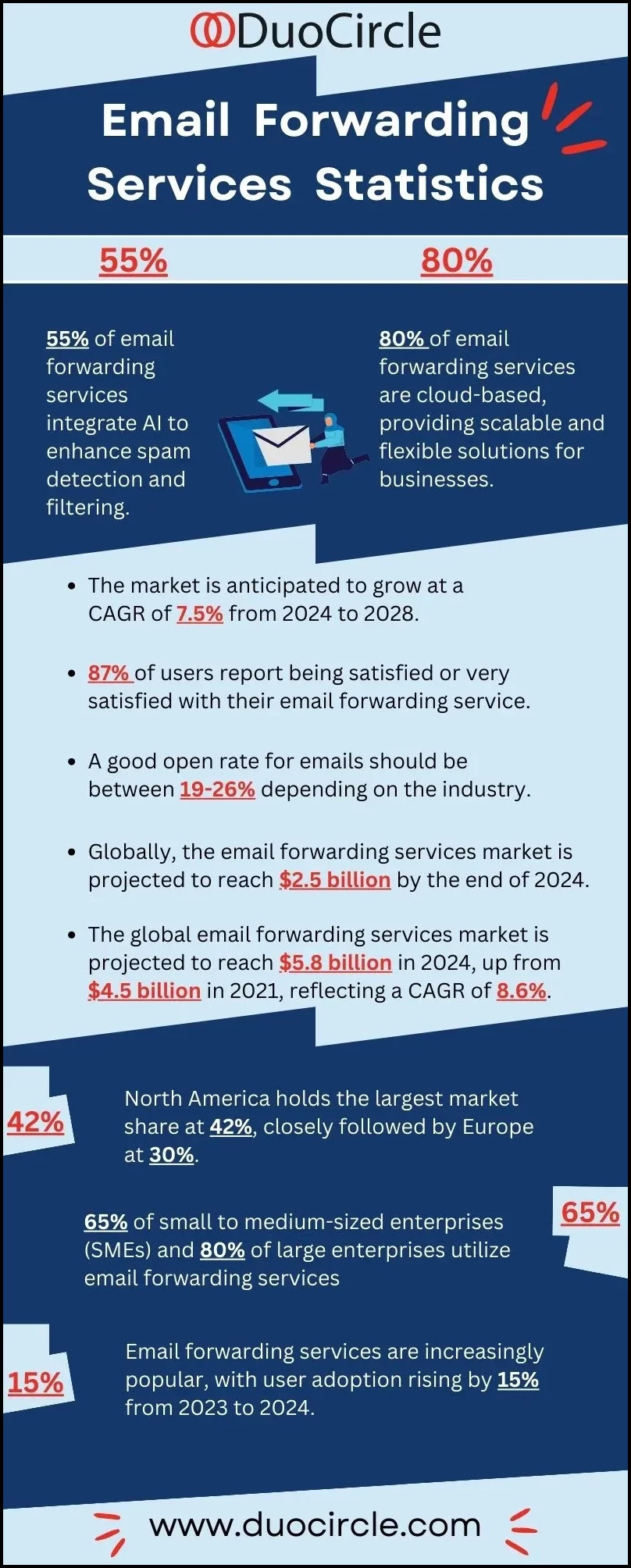
Not only does DuoCircle email forwarding redirect emails to an alternate address, but you can also set up forwarding groups, segmented by domain. And all DuoCircle plans come with spam and virus protection at no extra cost.
Since it is cloud-based, DuoCircle email forwarding integrates seamlessly with all the major email providers including Exchange, Office365 and G-Suite. Other features include unlimited email aliases, TLS encryption, activity logs, smart quarantine, CVS bulk import and 24/7 customer support.
Think before you forward. But once you decide to do it, let DuoCircle handle it for you.
General Manager
General Manager at DuoCircle. Product strategy and commercial lead across the email security portfolio.
Secure your email infrastructure
Protect, authenticate, and deliver. Contact our team to find the right solution.